

Content-Centric Networking changes the question a network asks: not “Where is the server?” but “What content is being requested?” That shift is simple on the surface, but it changes routing, caching, security, and failure handling. In a world where video, software updates, telemetry, and repeated API responses dominate traffic, this model can reduce waste and make content delivery more resilient.
TLDR: Content-Centric Networking, often called CCN, routes requests by content name instead of server address. If 10,000 users in one city request the same 50 MB software patch, nearby routers can serve cached copies instead of forcing every request back to the original data center. In practical terms, that could cut upstream traffic by more than 90% for repeated content. It is not a drop-in replacement for the internet, but it is a serious alternative for content-heavy systems.
What Content-Centric Networking Means
Traditional internet communication is host-based. A device contacts another device using an IP address. The network’s job is to move packets between hosts. The content itself is treated as payload, not as the main object of the exchange.
CCN reverses that view. The user asks for named content, such as:
- /news/world/report/video.mp4
- /vehicle/sensor/map/zone17
- /software/vendor/update/version42
The network then finds that content wherever it is available. It may come from the origin server. It may come from a nearby cache. It may come from another node that already retrieved and verified it.
This sounds obvious. It drives network engineers a bit mad that so much traffic still travels back to distant servers just to fetch identical copies of the same file. CCN tries to cut that waste at the network layer, not just through external content delivery systems.

How It Differs from Host-Based Communication
In the standard IP model, the user must reach a specific host. DNS translates a domain name into an IP address. Packets travel between source and destination addresses. If the host is down or distant, performance suffers.
In CCN, the request is usually called an Interest. The response is a Content Object or Data packet. The Interest names the content. Routers forward the Interest toward a likely source. When the data comes back, routers can store a copy in local cache.
This creates three key differences:
- Location independence: content can be served from many places, not one fixed host.
- Built-in caching: routers may reuse data for later requests.
- Content security: data can be signed, so trust is tied to the content, not only the connection.
That last point matters. In host-based networking, systems often trust the channel. TLS secures the connection to a server. In CCN, each content object can carry cryptographic proof. A receiver can verify that the data is authentic no matter where it came from.
The Basic CCN Workflow
A typical CCN exchange is straightforward:
- A consumer sends an Interest for named content.
- A router checks whether it has that content cached.
- If yes, it returns the content immediately.
- If no, it forwards the Interest toward another router or producer.
- When the content returns, intermediate routers may cache it.
- Future requests can be served from closer locations.
Routers often use three internal structures. The Content Store holds cached data. The Pending Interest Table tracks open requests. The Forwarding Information Base helps decide where to send Interests next.
This design also reduces duplicate requests. If several users ask for the same content at almost the same time, the router can combine those Interests. Only one upstream request may be needed. The returned content then satisfies all waiting users.
Why CCN Is Useful
CCN fits traffic patterns that are common and expensive. Many users ask for the same objects. Think streaming segments, map tiles, game patches, operating system updates, public records, AI model files, and IoT readings.
The benefits can be significant:
- Lower bandwidth use: repeated content is served locally when possible.
- Better latency: nearby cached content often arrives faster.
- Higher resilience: content can remain available even if the origin is unreachable.
- Simpler multicast-like delivery: many users can be served from one returned object.
- Stronger data-level trust: signed content can be checked anywhere.
Consider a university campus with 30,000 students. If a 2 GB video lecture is requested by 4,000 students in one week, pure host-based delivery could push up to 8 TB from the origin. With local CCN caching, the first request may fetch the video once, while later requests come from campus routers or edge nodes. Even after accounting for cache misses and version changes, the savings can be substantial.
Image not found in postmetaUse Case Scenario: Software Updates at the Edge
A regional logistics company operates 12,000 handheld scanners across warehouses. Each device downloads a 120 MB security update every month. Under a normal host-based setup, that creates about 1.44 TB of repeated traffic from central servers per update cycle.
With CCN-style distribution inside warehouse networks, the first devices fetch the update and local nodes cache the signed package. The remaining scanners request the same named update. Most receive it from inside the building. If the system achieves an 85% local cache hit rate, upstream transfer falls from 1.44 TB to about 216 GB. The update also finishes sooner because devices are not all fighting for the same remote path.
Honestly, it feels wasteful to pull the same patch thousands of times across long links when a verified local copy is already sitting one rack away.
Security in CCN
CCN does not remove the need for security planning. It changes where trust is placed. Instead of asking only, “Is this server legitimate?” CCN asks, “Is this content legitimate?”
Content objects can be digitally signed by producers. Routers and clients can verify signatures. This helps with safe caching because a cache does not need to be trusted as much as the content signature. A malicious cache should not be able to alter signed data without detection.
Still, there are hard problems. Key distribution must be managed. Naming must be controlled. Private content needs access rules and encryption. Cache poisoning must be prevented. Sensitive data should not be stored in shared caches without clear policy.
Limitations and Adoption Challenges
CCN is not magic. It also is not easy to deploy across the public internet. The current internet is built around IP, TCP, DNS, firewalls, load balancers, monitoring tools, and operational habits that assume host-based flows.
Main challenges include:
- Routing scale: content names can be far more numerous than host addresses.
- Cache control: stale, private, or regulated content must be handled carefully.
- Business fit: many providers depend on current CDN and cloud delivery models.
- Tooling gaps: diagnostics and observability are less mature than IP tools.
- Migration cost: existing applications are not usually written for named-data delivery.
Expect to waste time during early trials on naming schemes. Poor names create messy routing and weak cache performance. Teams also need clear rules for versioning. If content changes but names do not, users may receive stale data. If every tiny change creates a new name, cache efficiency drops.
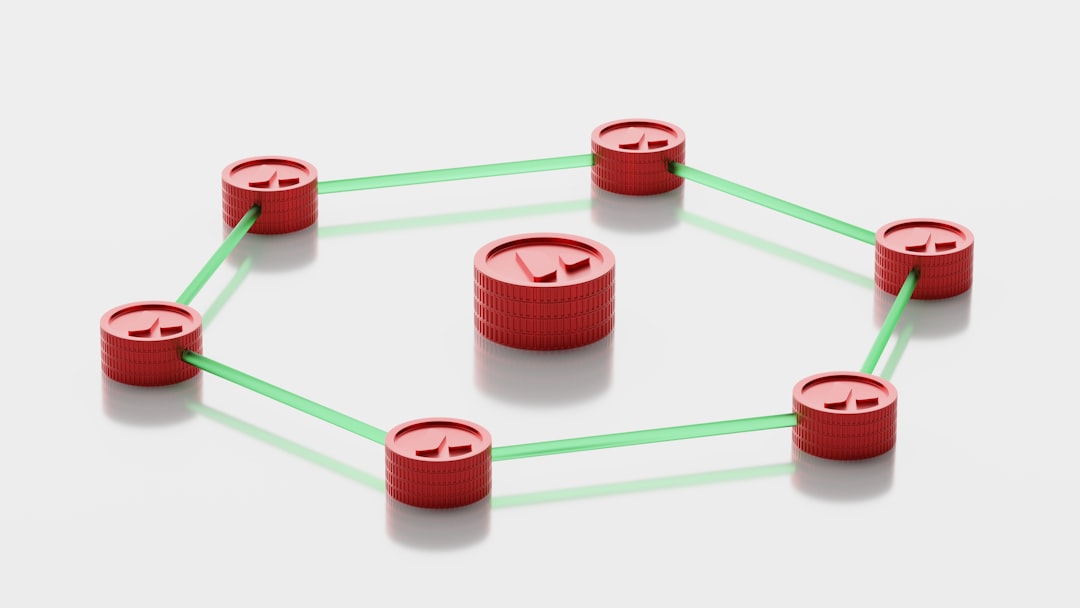
CCN, NDN, and CDNs
CCN is closely related to Named Data Networking, or NDN. Both focus on named content rather than host addresses. The terms are sometimes used together in research and architecture discussions, though implementations and details can differ.
CCN also overlaps with the role of Content Delivery Networks. CDNs cache content near users, but they usually operate as an overlay on top of IP. CCN pushes the content-aware model deeper into the network itself. A CDN helps solve today’s content delivery problem. CCN asks whether the base network should have been content-aware all along.
Where CCN Makes the Most Sense
Near-term use is more realistic in controlled environments than across the open internet. Good candidates include:
- campus networks
- industrial IoT systems
- vehicle networks
- military and emergency communications
- edge computing sites
- large software distribution systems
These settings have repeated content, known participants, and strong incentives to reduce bandwidth use. They also allow operators to define naming, security, and cache policy without waiting for global adoption.
Final Assessment
Content-Centric Networking is a serious rethink of network communication. It treats content as the primary object, not the host that stores it. That makes sense for traffic dominated by repeated data, edge delivery, and disconnected operation.
IP networking will not disappear because CCN exists. The installed base is too large, and host-based communication still works well for many interactive services. Yet CCN offers a credible model for systems where content reuse, resilience, and data-level trust matter more than direct host contact. For architects planning edge platforms or large-scale distribution, it deserves careful evaluation.