
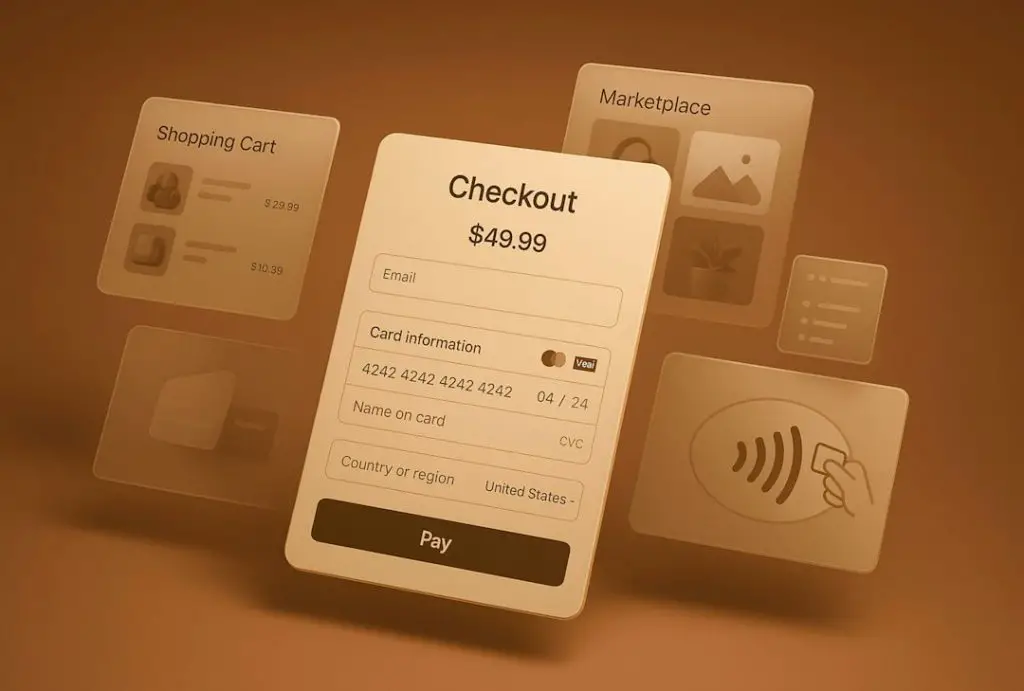
The best Stripe alternative depends on the pain you want to remove first. Pick Adyen for serious global payments, Braintree for PayPal and card checkout, Paddle for SaaS billing, and Checkout.com for custom payment flows. For context, Stripe’s standard US online card fee is 2.9% + 30¢ per successful charge [source: Stripe]. That is simple, but not always the best fit.
TLDR: If you sell worldwide, start with Adyen. If you run a SaaS company, test Paddle because it handles tax and subscriptions well. For example, a $10/month SaaS with 5,000 users may care more about failed payment recovery and sales tax than saving 0.1% on card fees. If you need PayPal at checkout, Braintree is the easy pick.


1. Adyen: best for global commerce
Adyen is built for companies selling in many countries. It supports cards, wallets, bank payments, and many local methods. Think shoppers in Europe using iDEAL. Or buyers in Asia using mobile wallets.
Best for: larger stores, marketplaces, travel brands, and global retail.
- Checkout: Strong hosted checkout and custom checkout tools.
- Billing: Works for recurring payments, but it is not as “plug and play” as some SaaS tools.
- Fraud prevention: Built-in risk tools help block bad orders.
- Global commerce: This is where Adyen shines.
The catch is setup. It can feel a bit grown-up if you only sell 20 candles a week. You may wait longer for approvals and setup than you would with a simpler tool. But once it is running, it is powerful.
2. Braintree: best for PayPal-friendly checkout
Braintree is owned by PayPal. That matters. Many customers still trust PayPal, especially when they do not know your brand yet. PayPal reported 426 million active accounts at the end of 2023 [source: PayPal]. That is a lot of potential buyers.
Best for: online stores, apps, and businesses that want cards, PayPal, Venmo, and wallets in one place.
- Checkout: Great if you want PayPal buttons next to card payments.
- Billing: Supports subscriptions and recurring billing.
- Fraud prevention: Includes fraud tools, with extra risk options available.
- Global commerce: Good coverage, but check country support first.
Honestly, it feels like Braintree should be easier to understand than it is. Pricing pages and feature names can send you into too many tabs. Still, the PayPal connection can lift trust fast.
3. Paddle: best for SaaS billing and tax headaches
Paddle is not just a payment processor. It is a merchant of record. That means Paddle can handle payments, invoices, tax, checkout, and compliance for digital products.
This is huge for SaaS teams. Sales tax, VAT, failed payments, plan changes, and invoices can eat your week. Paddle takes much of that mess off your plate.
Best for: SaaS tools, software sellers, app makers, and digital downloads.
- Checkout: Clean checkout for digital products.
- Billing: Very strong for subscriptions, trials, upgrades, and renewals.
- Fraud prevention: Built into the payment flow.
- Global commerce: Strong because tax handling is included.
The annoying bit? Paddle is not ideal for physical goods. If you ship shoes, mugs, or pet toys, it may not be your best friend. But for software, it can save a shocking amount of admin time.
4. Checkout.com: best for custom payment teams
Checkout.com is a strong Stripe alternative for teams that want control. It is popular with fintech, gaming, crypto, marketplaces, and large ecommerce brands.
Best for: companies with developers, high payment volume, and custom checkout needs.
- Checkout: Flexible APIs and hosted checkout options.
- Billing: Supports recurring payments, though it is not as SaaS-focused as Paddle.
- Fraud prevention: Offers risk tools and extra control over payment rules.
- Global commerce: Strong international card and local payment coverage.
Expect to waste time on setup if your team is small. This is not the “sign up at lunch, sell by dinner” option. But for serious payment teams, that control is the point.
Quick pick guide
- Choose Adyen if you sell across countries and need many local payment methods.
- Choose Braintree if PayPal is key to your checkout.
- Choose Paddle if you sell SaaS or digital products and hate tax admin.
- Choose Checkout.com if you have developers and need a custom payment setup.
What to check before switching
Do not switch just because one fee looks lower. Payment tools hide pain in small places. Failed payments matter. Refund rules matter. Payout speed matters. So does support when your checkout breaks at 9 p.m.
- Fees: Check card fees, currency fees, chargeback fees, and refund fees.
- Countries: Make sure your top buyer countries are supported.
- Payment methods: Add the methods your customers already use.
- Fraud tools: Cheap payments are not cheap if fraud rises.
- Billing: If you sell subscriptions, test upgrades, pauses, coupons, and failed payments.
Bottom line: Stripe is still a great tool. But it is not magic. Adyen wins for scale. Braintree wins for PayPal trust. Paddle wins for SaaS billing. Checkout.com wins for custom global payment builds. Pick the one that removes your biggest headache first.